
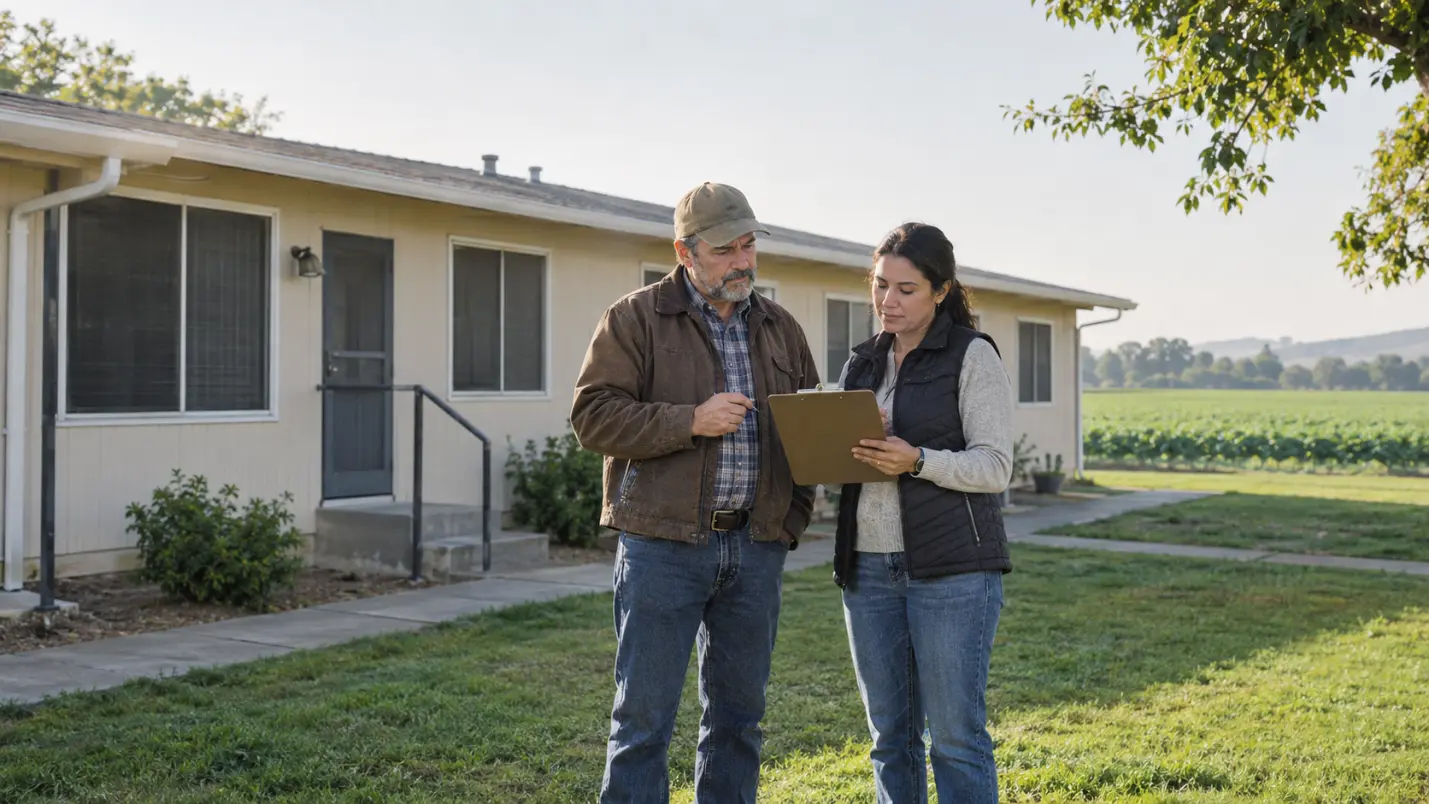
A practical h2a housing inspection checklist starts months before agricultural workers move in.
It connects the condition of each housing unit with the official inspection process, the number of workers expected, transportation to the worksite, and a plan for correcting problems. A clean internal walkthrough is helpful, but it does not replace required approvals. For U.S. agricultural employers planning a seasonal H-2A workforce, the goal is to have safe, compliant accommodations ready before occupancy—and keep them that way throughout the season.
This updated guide builds on the standards, owners, and checkpoints approach to H-2A housing compliance. It explains which housing arrangements need different checks, gives ten practical inspection areas, and shows how to connect housing readiness with transportation and worker arrival. Requirements depend on the actual facility and applicable federal, state, and local standards.
Start With the Housing Type and the Official Inspection
Under the U.S. Department of Labor’s H-2A Compliance Review, covered H-2A workers and workers in corresponding employment who cannot reasonably return to their permanent residence the same day must receive qualifying housing without rent or deposits. The housing must meet applicable safety and health standards, be disclosed in the job order, and satisfy the relevant pre-occupancy approval requirements. Employers remain responsible for compliant arrangements even when a landlord or vendor supplies the property.
Employer-Provided Camps and Other Housing Facilities
For employer-provided agricultural worker housing, the State Workforce Agency (SWA), or an authorized inspecting agency, generally conducts a pre-occupancy inspection associated with the H-2A application. The governing checklist may be based on OSHA temporary labor camp standards or ETA housing standards, depending in part on the facility’s construction history and any major renovation. Special standards can apply to range housing. Ask the SWA which requirements apply rather than selecting whichever checklist looks easier.
Rental Housing and Public Accommodations
Hotels, motels, and rental units available to the general public follow a distinct standards-and-documentation analysis. Where applicable local or state rental or public-accommodation standards exist, those requirements ordinarily control; when neither exists, federal standards may apply. An SWA inspection is not automatically required for every ordinary rental unit, but other inspections or proof of compliance may be necessary. Review the DOL guidance for rental and public accommodations and confirm the evidence required for your specific arrangement before relying on a reservation.
Ten Checks for a Preseason H-2A Housing Walkthrough
Use these items as a management tool alongside the official form; they do not replace a technical inspection. Record the facility, date, responsible person, observed condition, corrective action, and follow-up result for each item.
1. Confirm the Address, Available Beds, and Approved Capacity
Match every housing address and unit to the job-order description and intended occupancy. Count actual sleeping spaces and measure rooms against the applicable standard; rules for square footage and bunk configurations differ between standards. Do not add workers based on a landlord’s verbal estimate or place new beds in rooms beyond their approved capacity. Keep a room-by-room allocation plan that can be updated when arrivals change.
2. Inspect Site Drainage and Exterior Conditions
Look for standing water, flood exposure, sewage problems, unsafe paths, excess debris, uncontrolled weeds, and pests. Check roofs, doors, windows, steps, railings, and exterior lighting for defects. The OSHA temporary labor camp rules address site drainage and sanitation, while local housing or building codes can add requirements. Document repairs with before-and-after evidence, and bring unsafe structural conditions to an appropriately qualified professional.
3. Verify Potable Water and Wastewater Systems
Confirm a reliable, approved water source for drinking, cooking, bathing, and washing. Test fixtures and document leaks, inadequate pressure, missing hot water, and blocked drains. Confirm sewage disposal works and does not discharge onto the ground. If a private well or septic system serves the facility, identify applicable testing, permits, and inspection requirements rather than assuming the system is acceptable because it operated last season.
4. Check Toilets, Showers, Handwashing, and Laundry
Count functioning fixtures against occupancy and the correct housing standard. Inspect sanitation, privacy, ventilation, water temperature, accessible supplies, drainage, and lighting. The OSHA temporary labor camp standard, 29 CFR 1910.142, sets specific ratios and location rules for covered facilities; ETA standards can differ. A checklist that says only “bathroom clean” will miss capacity and functional problems.
5. Review Sleeping Rooms, Bedding, and Ventilation
Confirm structurally sound rooms, clean sleeping surfaces, appropriate beds or bunks, usable ventilation, weather protection, windows and screens, and safe heating or cooling arrangements as applicable. Look for moisture damage, pests, exposed wiring, and conditions that interfere with safe egress. Assign a maintenance owner to correct issues before arrival and to respond if mattresses, screens, heating equipment, or other features fail after move-in.
6. Confirm Meals or Suitable Cooking Facilities
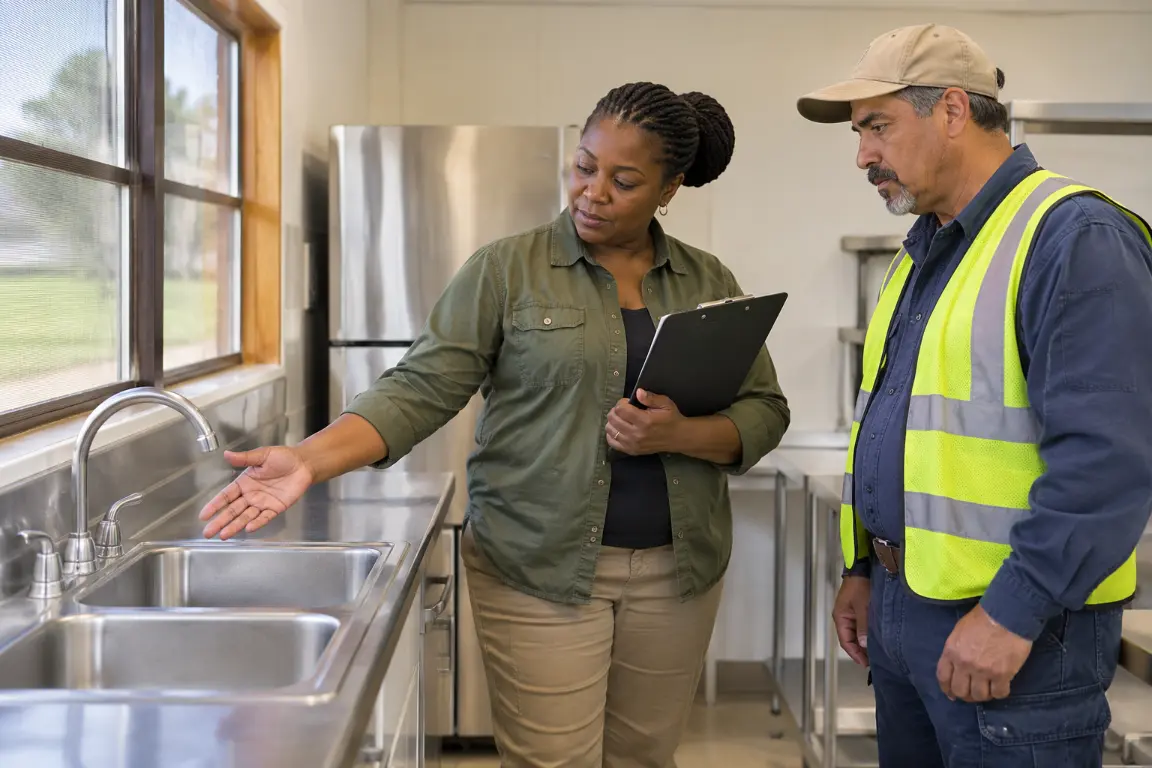
H-2A employers must meet the applicable meal-or-cooking-facility obligation. Where workers prepare their own food, assess kitchen access, refrigeration, food-storage space, cleanable surfaces, sinks, ventilation, and appropriate equipment for the number of occupants. Where the employer provides meals, review the arrangement, applicable meal charges and disclosures, and food safety responsibilities. An empty kitchenette is not automatically compliant merely because a stove is present.
7. Review Fire Safety, Electrical Systems, and Egress
Check exit paths, door operation, fire extinguishers, alarms or detectors where required, electrical outlets, lighting, and safe installation of heating and cooking equipment. Do not block exits with added beds or storage. Verify the applicable state and local fire and building requirements as well as the federal housing checklist. Gas, electrical, structural, and fire-safety repairs should be handled by qualified personnel.
8. Check Garbage Removal, Pest Control, and Housekeeping
Inspect covered refuse containers, collection schedules, food-storage practices, insect screens, and signs of rodents or insects. Identify who supplies cleaning materials, who handles common areas, and how pest or sanitation complaints will be addressed. A pre-occupancy photograph is a starting record, not evidence that conditions remained acceptable later in the season.
9. Verify Worker Notices, Housing Terms, and Issue Reporting
Keep the applicable inspection approval, occupancy or housing notices, and other required postings available as law requires. Prepare an understandable orientation explaining sleeping assignments, kitchen use, routine transportation, emergency contacts, and a practical way to report maintenance concerns. Do not treat worker complaints as an inconvenience: log the issue, assign ownership, protect against retaliation, and confirm when corrective work is complete.
10. Match the Housing Plan to Transportation Capacity
Housing readiness is incomplete if workers cannot travel safely to and from the jobsite. For workers living in qualifying employer-provided housing, H-2A rules generally require daily worksite transportation at no cost. Check travel routes, trip times, passenger capacity, backup vehicles, valid driver licenses, and required insurance. The DOL transportation safety checklist is a useful starting point, but the applicable vehicle and trip standards must be evaluated for the actual operation.
When Should the Employer Schedule the Housing Inspection?
Do not make worker arrival the target date for fixing housing. The DOL H-2A program process begins with a job order filed with the SWA before the anticipated date of need. Contact the SWA early to understand inspection scheduling, documentation, and possible corrective work. DOL encourages returning program users to have housing ready around the time the clearance order is filed or earlier. Specific filing deadlines, alternate procedures, and inspection arrangements need current case-specific verification.
An effective internal schedule has four checkpoints: a preliminary walkthrough while repairs can still be budgeted; a full readiness check before the official inspection; verification that any cited deficiencies have been corrected and accepted by the proper authority; and a final move-in review before occupancy. An internal checklist is never a substitute for required inspection or certification. Keep the official inspection record with the correct season’s job-order documentation.
Turn the Checklist Into a Standards, Owners, and Checkpoints System
The strongest part of the original housing and transport planning approach is its accountability model. Make it operational by giving each standard a named owner and a date for review. Housing coordinators can maintain room inventories and inspection correspondence; maintenance leads can manage repairs; transport managers can verify vehicles and drivers; and HR can coordinate arrival communications. The employer still needs an overall accountable program owner when functions are delegated.
Create one shared record with the housing address, assigned capacity, applicable checklist, inspection status, corrective items, photographs, vendor responsibilities, transportation arrangements, and worker issue log. Limit access to personal worker information. A routine in-season walkthrough should check that required conditions remain satisfactory—not imply the property is permanently approved after a single preseason visit.
Quick H-2A Employer Housing Checklist
- Confirm housing addresses, type, proposed occupancy, and job-order accuracy.
- Ask the SWA or qualified adviser which inspection and safety standards apply.
- Schedule official review early enough for correction and reinspection if needed.
- Verify site drainage, weather protection, safe entrances, and structural condition.
- Check approved water supply, wastewater disposal, and working sanitary fixtures.
- Count beds, toilets, bathing facilities, and kitchen capacity under the correct standard.
- Review electrical and fire safety, lighting, exits, ventilation, and pest control.
- Confirm no-cost housing obligations and the meals-or-cooking arrangement.
- Document transportation, licensed drivers, vehicle safety, insurance, and backup routes.
- Keep inspection evidence, repairs, worker orientation, issue reports, and follow-up logs together.
Frequently Asked Questions
Does every H-2A worker have to be provided housing?
H-2A employers must provide qualifying no-cost housing to H-2A workers and workers in corresponding employment who cannot reasonably return to their permanent residence the same day. The facts and job order matter, and the employer should review the full applicable rule.
Is employer-owned housing inspected every season?
For ordinary employer-provided facilities, DOL guidance describes pre-occupancy inspection connected to each H-2A application. Confirm your SWA’s process, any special procedures, and the current approval requirements instead of relying on a prior season’s certificate.
Can an employer use a hotel or rental property?
Potentially, but the rental or public accommodation must meet applicable standards, fit the disclosed housing plan, and have any required documentation. The process is not identical to inspection of a farm-operated labor camp.
What happens if the inspector finds deficiencies?
The employer should obtain the written findings, prioritize safety, complete corrective work, and follow the authorized reinspection or approval process. Do not move workers into housing that lacks required approval. An extension or accommodation cannot be assumed.
Does the housing inspection cover transportation?
Housing and transportation are related H-2A employer obligations, but a housing inspection does not itself certify every bus, van, driver, or route. Evaluate vehicle standards, driver qualifications, insurance, and daily transportation separately.
Can a landlord take responsibility for all H-2A housing compliance?
A landlord can maintain a property and provide evidence, but an H-2A employer should not assume a vendor contract eliminates its program obligations. Confirm the applicable rules and establish clear inspection, repair, and reporting responsibilities.
Plan Housing Before the Hiring Deadline
A usable h2a housing inspection checklist helps employers find problems while there is still time to correct them. It works best as part of a coordinated plan for housing, worker arrivals, transportation, and documented follow-up—not as a form completed the night before inspection. 3A Immigration Services’ H-2A employer program explains its workforce and immigration support, while its employer solutions overview outlines the broader approach. To discuss the season’s housing, staffing, and application dependencies, request a consultation and bring the proposed housing plan and start date.
Legal, safety, and compliance disclaimer: This article is general planning information, not a legal opinion, official housing inspection, building inspection, transportation safety certification, or promise of H-2A labor certification. Housing standards vary by facility type, construction history, state and local rules, and applicable special procedures. Regulations, enforcement guidance, and forms can change; confirm current obligations with the SWA, DOL, qualified inspectors, and appropriately qualified immigration and employment counsel before occupancy or worker travel.
RELATED LINK: U.S. Department of Labor — OSHA Housing Safety and Health Checklist