

Seasonal labor brand risk begins when a staffing shortage stops being an internal scheduling problem and starts changing what guests experience. In hospitality, a missing housekeeper, server, front-desk agent, grounds worker, kitchen employee, or maintenance technician can quickly become a delayed room, slower service, reduced amenities, longer lines, inconsistent cleanliness, or an exhausted team interacting with customers. For a general manager, seasonal workforce planning is therefore not only a labor issue. It is part of service delivery, customer experience, and reputation management.
A Staffing Gap Can Become a Brand Gap
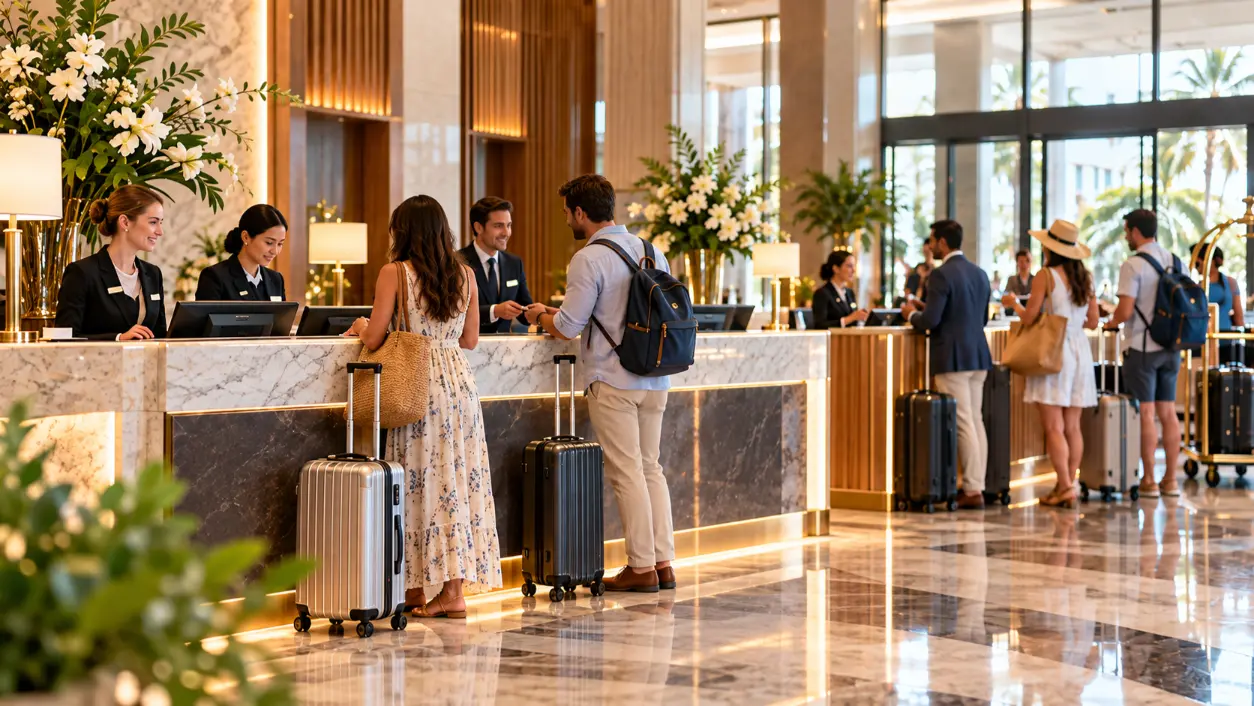
Hospitality brands are judged in real time. Guests rarely separate a labor shortage from the property itself. They experience the outcome: a room not ready, reduced service hours, slower requests, or an overstretched team.
That is what makes seasonal staffing different from many back-office problems. When labor capacity falls below operating demand, the consequences are visible to customers. A strong brand promise can be weakened by a weak shift schedule.
Where Seasonal Labor Pressure Shows Up in the Guest Experience
1. Service Speed and Availability
The first sign is often slower service. Check-in lines grow, housekeeping turns take longer, tables stay uncleared, maintenance tickets accumulate, or amenities operate on reduced hours. None of these outcomes automatically creates reputational damage, but repeated friction can make the customer experience feel less reliable.
2. Consistency Across Shifts
Seasonal peaks can force managers to rely on overtime, supervisors covering frontline roles, new hires, or unstable schedules. Service quality can then vary by shift or day.
3. Employee Strain That Reaches the Customer
When staffing stays below demand, the burden shifts to the employees who remain. Overtime, rushed onboarding, and managers working the floor can create fatigue and turnover pressure that customers may notice in responsiveness and attention to detail.
4. Reviews and Local Reputation
Online reviews can turn temporary operational problems into a longer-lasting public record. The risk is not that every shortage causes bad reviews; it is that recurring service failures can become part of how future customers evaluate the property.
Hospitality Labor Pressure Is an Operating Reality
Current federal labor data continues to show substantial hiring and separation activity in leisure and hospitality. In July 2026, the Bureau of Labor Statistics reported a 5.1% hires rate for leisure and hospitality, with accommodation and food services at 5.2%. Those figures do not describe any one local market, but they illustrate why hospitality workforce planning often requires continuous recruiting rather than a single annual hiring push.
The local picture matters more than the national number. Employers should plan from their own demand history, applicant supply, turnover patterns, and service standards.
Start by Separating Permanent Shortage From Temporary Need
Before evaluating an H-2B strategy, employers should distinguish a general recruiting problem from a qualifying temporary labor need. The H-2B program is for temporary non-agricultural services or labor. The Department of Labor states that the employer must establish a temporary need based on a one-time occurrence, seasonal need, peakload need, or intermittent need.
For seasonal need, the staffing demand should be tied to a recurring season or pattern rather than simply a permanent position that is difficult to fill. A hotel that struggles to recruit year-round employees has a different issue from a resort that can document a predictable annual surge requiring additional temporary staff.
If the shortage is permanent, the company needs a permanent recruiting and retention plan. If demand predictably increases for a defined period, temporary workforce tools may belong in the planning discussion.
When H-2B May Fit a Hospitality Workforce Plan
H-2B may be worth evaluating when a U.S. hospitality employer has a genuine temporary need for non-agricultural workers and expects local recruiting alone may not fill all required positions. The Department of Labor requires employers to complete a temporary labor certification process designed to test U.S. worker availability and protect wages and working conditions.
The program is not an emergency staffing switch. H-2B requires advance preparation, a defined period of need, a bona fide full-time temporary job opportunity, recruitment of U.S. workers, wage compliance, job-order requirements, and additional employer obligations. DOL guidance states that H-2B job opportunities generally must be full-time, at least 35 hours per workweek.
Because timing, program limits, case facts, and worker availability can affect outcomes, employers should not build a guest-service plan around assumed H-2B arrival dates. Immigration strategy should sit inside a broader staffing plan with contingencies.
Build the Staffing Plan Backward From the Guest Promise
A useful hospitality workforce plan starts with service standards, not just headcount. Ask what the property promises during peak demand and what labor capacity is required to deliver it.
- Expected occupancy, covers, events, or visitor volume by week.
- Rooms, tables, outlets, amenities, or service areas that must remain open.
- Minimum staffing needed to maintain cleaning, food service, maintenance, safety, and guest-response standards.
- Roles that require longer training or are historically hardest to fill locally.
- Service failures that appear first when staffing drops below plan.
- Backup staffing options if hiring arrives late or demand exceeds forecast.
This makes workforce planning measurable by linking specific positions to specific parts of the guest experience.
Use a Layered Seasonal Hiring Strategy
An H-2B evaluation should complement, not replace, local workforce development. A stronger plan uses several layers.
Local Recruiting First
Start early with returning seasonal employees, employee referrals, local job boards, community partnerships, schools, workforce agencies, and targeted recruiting. DOL’s H-2B process itself includes U.S. worker recruitment requirements.
Retention of Returning Seasonal Employees
Experienced seasonal employees can protect service consistency because they already know the property, standards, systems, and peak-season rhythm. Track why reliable seasonal employees return or do not return and address avoidable friction before the next season.
Cross-Training and Internal Flexibility
Cross-training cannot solve every shortage, but it can reduce single-point failures. Identify which supervisors and employees can support adjacent functions during unusual demand without creating safety, wage, licensing, or service-quality problems.
Temporary Visa Evaluation Where Appropriate
If the employer has a qualifying temporary need, H-2B can be evaluated as one component of the plan. Immigration counsel and workforce specialists should review the operating pattern, dates of need, positions, worksites, wage requirements, recruitment obligations, and filing strategy before the business depends on that pathway.
Watch for Early Signs That Staffing Is Becoming a Brand Risk
- Recurring guest complaints that trace back to wait times or reduced service.
- Frequent closure or reduction of amenities during high-demand periods.
- Housekeeping, food service, maintenance, or guest-service backlogs.
- Managers routinely filling frontline shifts instead of managing operations.
- Overtime and schedule instability becoming the normal operating model.
- New-hire training being compressed because positions were filled too late.
- Review themes that repeat across multiple weeks or peak periods.
- Returning seasonal employees declining to come back at higher-than-expected rates.
These signals do not prove that immigration sponsorship is the answer. They show that staffing has become a customer-experience issue that deserves an earlier workforce response.
Create a Pre-Season Workforce Risk Review
General managers can formalize seasonal planning with a short cross-functional review involving operations, HR, finance, department leaders, and immigration counsel when appropriate. The purpose is to identify risk before the property is already operating at peak demand.
- Forecast peak demand and service levels by period.
- Calculate required staffing by department and critical role.
- Identify expected returning workers and realistic local recruiting supply.
- Flag the largest gaps and the guest experiences those gaps could affect.
- Determine whether the need is permanent, seasonal, peakload, intermittent, or otherwise temporary.
- Evaluate H-2B eligibility and timing early when the facts may support it.
- Document local recruiting, retention, cross-training, and contingency measures.
- Set escalation points for when service capacity must be adjusted.
- Monitor hiring progress against the operating calendar, not just an HR deadline.
- After the season, compare staffing levels with service metrics, reviews, overtime, and turnover to improve the next plan.
Protect the Brand With Realistic Service Decisions
When staffing cannot meet the original operating plan, the worst option may be pretending nothing has changed. A property may protect the guest experience better by adjusting reservations, outlet hours, housekeeping schedules, event capacity, or amenity availability in a controlled and clearly communicated way rather than allowing service to fail unpredictably.
Those decisions are operational, not immigration decisions. The point is to connect workforce capacity to the promises made to customers.
How 3A Immigration Services Fits the Workforce Plan
3A Immigration Services works with U.S. employers on H-2B and other workforce, recruiting, immigration, and global mobility solutions. Hospitality employers can review the 3A Immigration Services H-2B Program, explore the company’s broader workforce and immigration solutions, or request a consultation to evaluate whether a temporary visa strategy fits the employer’s documented seasonal need and operating calendar.
The goal is not to treat H-2B as a substitute for local hiring. It is to decide early whether a compliant temporary workforce pathway belongs inside a layered plan designed to protect service continuity during predictable periods of peak demand.
FAQ: Seasonal Labor and Brand Risk
How Can a Seasonal Labor Shortage Affect a Hospitality Brand?
A shortage can affect wait times, room readiness, cleanliness, food service, amenity availability, employee responsiveness, and other parts of the guest experience. If those problems recur, they can influence reviews and customer perception. The impact varies by property and role.
Does H-2B Solve a General Hospitality Labor Shortage?
Not by itself. H-2B is tied to a qualifying temporary need, and employers must satisfy program requirements. A permanent year-round recruiting problem requires a broader workforce strategy.
When Should a Hospitality Employer Evaluate H-2B?
Evaluation should begin well before the period of need because the process includes temporary-need analysis, wage and job-order steps, U.S. worker recruitment, government filings, and other requirements. Exact timing should be reviewed for the employer’s specific facts and current program conditions.
Can an Employer Guarantee H-2B Workers Will Arrive for Peak Season?
No. Employers should not promise worker arrival, visa approval, or a specific completion date. Government processing, statutory and regulatory limits, recruitment results, case facts, consular processing, and individual worker circumstances can affect outcomes.
What Should a General Manager Measure After the Season?
Compare staffing levels and vacancy duration with overtime, service delays, guest complaints, review themes, amenity closures, employee turnover, and returning-worker rates. The goal is to understand where staffing capacity affected the customer experience and improve the next seasonal plan.
The Bottom Line
Seasonal labor brand risk appears when predictable staffing gaps begin changing what customers experience. For hospitality general managers, workforce planning should therefore be built into the operating plan early enough to protect service standards, employees, and reputation.
Local recruiting, retention, cross-training, operational contingencies, and—when the employer has a qualifying temporary need—an H-2B evaluation can all play a role. The strongest strategy is layered, documented, and tied to the seasonal demand curve rather than activated only after the schedule is already short.
Disclaimer: This article provides general educational information about workforce planning and the H-2B program and is not legal advice. H-2B eligibility, temporary-need classification, recruitment, wages, filing requirements, program availability, processing, worker eligibility, and timing depend on the employer’s facts and current law and agency procedures. Employers should obtain case-specific advice from qualified immigration counsel before relying on H-2B or making workforce commitments based on expected immigration outcomes.
Official Resources
- U.S. Department of Labor – H-2B Temporary Non-Agricultural Program
- U.S. Department of Labor – General H-2B Employer Requirements
- U.S. Bureau of Labor Statistics – Leisure and Hospitality
RELATED LINK: U.S. Department of Labor – H-2B Temporary Non-Agricultural Program