

For a business buyer, E-2 investment traceability means being able to follow the investment from its legitimate origin, through every account and transfer, to the final purchase or business expense. Many investors collect proof that they own money and proof that they bought a company, yet leave a gap between those two endpoints.
That missing middle can create avoidable questions, document requests, and last-minute reconstruction.
The objective is not to produce the largest possible stack of bank statements. It is to create a coherent, chronological record that allows a reviewer to understand three things without guessing: where the capital came from, how the investor possessed and controlled it, and how the same capital became committed to a real U.S. enterprise.
Traceability Is the Connection Between Source and Investment
The E-2 rules do not use “traceability” as a separate eligibility category. In practice, however, a clean financial trail helps prove several core requirements at once. Department of State guidance permits investment funds from legitimate sources such as savings, gifts, inheritance, earnings, asset sales, and certain loans, while requiring the investor to demonstrate possession and control. It also requires the funds to be genuinely committed rather than merely held in an account.
For a small-business acquisition, the evidence should connect the investor’s financial history to the purchase agreement, escrow, closing, and business capitalization. A persuasive case reads like one continuous transaction, not several unrelated folders.
Build the Trail Around Three Questions
1. Where did the money originate?
Identify the economic event that created the capital. Examples include accumulated employment income, business distributions, the sale of real estate, the sale of securities, an inheritance, a documented gift, or a qualifying loan. The source explanation should match tax records, contracts, account history, and the investor’s financial profile.
2. How did the money move?
Show every material step between the original source and the U.S. business. That may include transfers between personal accounts, a brokerage liquidation, currency conversion, a wire to a U.S. account, an escrow deposit, and the closing disbursement. Each outgoing amount should have a corresponding incoming entry, allowing for documented exchange-rate changes, banking fees, or partial transfers.
3. Where was the money committed?
Document the business transaction or expense that put the funds at risk. For an acquisition, that may be a signed purchase agreement, escrow record, closing statement, seller receipt, franchise payment, equipment purchase, lease deposit, inventory purchase, licensing cost, or working-capital contribution. Funds sitting in a bank account without a binding commitment generally do not tell the full investment story.
Write the Source-of-Funds Narrative First
Before gathering hundreds of pages, write a short factual narrative in plain language. State the source, approximate dates, account owners, transfer path, investment destination, and purpose of each major payment. This draft exposes missing documents early and helps the investor, attorney, accountant, and business broker work from the same chronology.
The narrative should not exaggerate or simplify away difficult facts. If capital was combined from several sources, used across multiple currencies, routed through a spouse’s account, or temporarily placed in a company account, explain that structure and support it. An unexplained complexity is a problem; a documented complexity may be manageable.
Common Sources and the Documents That Connect Them
Savings and employment income
Long-term savings are usually stronger when the account history is consistent with the investor’s earnings. Useful records may include employment letters, pay statements, tax returns, bank statements covering the accumulation period, and an explanation of unusually large deposits. A single current balance statement proves possession but may not explain how the balance was created.
Sale of property, a business, or securities
Connect ownership to sale proceeds. For real estate, that may involve title records, the sale agreement, closing statement, mortgage payoff, tax records, and the bank credit showing net proceeds. For a business or securities sale, use ownership records, sale confirmations, brokerage statements, corporate documents, and the receiving account statement.
Gifted funds
A gift should be documented from both sides. The record may include a signed gift statement, the donor’s identity and relationship to the investor, evidence of the donor’s legitimate source, the donor’s outgoing transfer, the investor’s incoming receipt, and any relevant tax documentation. The purpose is to show that the gift is real, available to the investor, and not an undisclosed obligation.
Inheritance
Inheritance evidence may include a will, probate or succession records, executor documentation, estate account statements, distribution records, and the deposit into the investor’s account. When records are issued in another country, plan for complete copies and appropriate translations.
Loans
Loan treatment requires careful case-specific analysis. Department of State guidance recognizes certain indebtedness secured by the investor’s personal assets or based on the investor’s personal responsibility, while debt secured by the E-2 enterprise itself may not place the investor’s own capital at risk in the same way. Keep the signed loan agreement, collateral records, disbursement evidence, repayment terms, and the transfer into the investment path.
Funds distributed from an existing company
If the investor receives dividends, owner distributions, or proceeds from a foreign company, document ownership, authorization for the distribution, company financial statements, tax treatment, the company’s outgoing payment, and the investor’s receipt. Do not assume that access to a company bank account automatically proves personal possession and control.
Create a Bank Trail That Can Be Read in Minutes
Organize statements in chronological order and highlight only the relevant entries. For each transfer, identify the sending account, receiving account, date, amount, currency, and transaction reference. When the names on the accounts differ, add the ownership or relationship evidence that explains why.
Use complete bank statements rather than isolated screenshots whenever possible. Screenshots can omit account ownership, transaction context, page numbers, balances, and adjacent activity. A reviewer should be able to see that the account belongs to the claimed person or entity and that the transfer was completed, not merely initiated.
Account for Currency Conversion and Transfer Friction
International investment trails rarely match dollar-for-dollar. Exchange rates, intermediary banks, wire charges, escrow fees, taxes, and partial transfers can change the numbers. Record the original currency, conversion date, exchange rate or conversion record, fees, and net U.S. dollar amount.
Do not leave a numerical gap unexplained simply because it appears small relative to the total investment. A short reconciliation table can show why a transfer of one amount became a slightly different deposit or closing credit.
For a Business Acquisition, Document the Closing Path
A small-business buyer should connect the financial trail to the legal structure of the acquisition. The file may need to distinguish between the purchase price, assumed liabilities, broker fees, escrow, franchise transfer fees, inventory adjustments, lease deposits, professional fees, and working capital.
- Letter of intent and signed purchase agreement, including amendments.
- Escrow agreement, escrow ledger, and proof of deposit.
- Closing statement showing the allocation and disbursement of funds.
- Wire confirmations and seller acknowledgment of receipt.
- Asset schedule, stock or membership-interest transfer documents, and ownership records.
- Evidence of franchise, lease, license, equipment, inventory, or vendor payments.
- Business bank statements showing post-closing capitalization and operating expenses.
- Evidence that the enterprise is operating or will open imminently, when applicable.
When the transaction is conditioned on visa issuance, escrow can sometimes support a real commitment if the agreement makes the release conditions clear. The structure should be reviewed before signing because a weak contingency, revocable arrangement, or incomplete transaction may not demonstrate the level of commitment the case requires.
The Most Common Breaks in the Proof Trail
- A large deposit appears without evidence of the underlying sale, gift, income, or loan.
- Funds move through an account owned by a spouse, relative, partner, or company without explaining ownership and authority.
- Only the first and last bank records are included, leaving intermediate accounts undocumented.
- The purchase price changed, but the amended agreement and revised closing records are missing.
- Several transfers were combined, split, or converted without a reconciliation schedule.
- Cash deposits are used without reliable evidence of how the cash was earned or acquired.
- Bank screenshots do not show the account holder, currency, completion status, or full transaction context.
- The investor proves a wire to a U.S. account but not the later payment to the business, seller, escrow agent, or vendors.
- Third parties paid business expenses directly, but the file does not explain whether the payment was a gift, loan, reimbursement, or capital contribution.
- Documents use inconsistent names, dates, entity names, or ownership percentages.
Use a Transaction Ledger as the Master Index
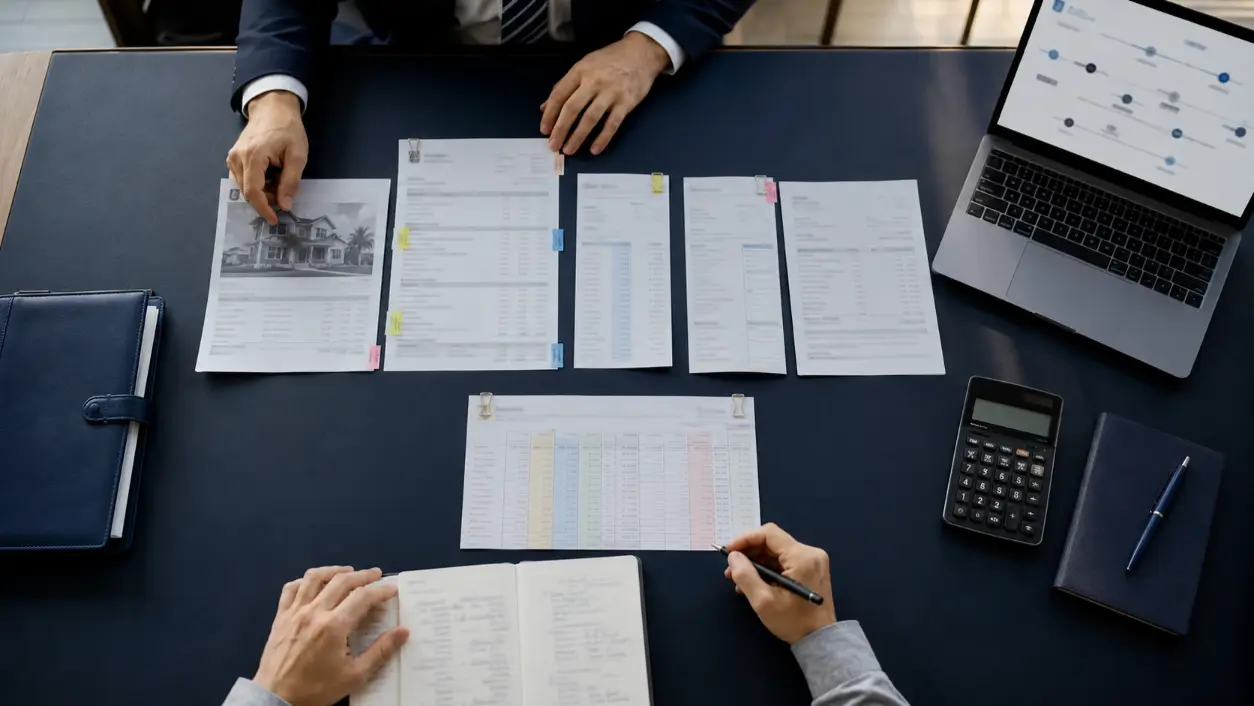
A simple ledger can reduce rework dramatically. Create one line for every major movement of money and link that line to the supporting exhibit. The ledger is not a replacement for evidence; it is the map that makes the evidence usable.
- Assign each source a label, such as S1 for savings or S2 for property-sale proceeds.
- Record the date, sender, receiver, amount, currency, purpose, and account identifiers.
- Note fees, exchange-rate differences, refunds, or partial transfers.
- Add the exhibit number for the source document and both sides of the transfer.
- Reconcile the total qualifying funds to the purchase price and business expenditures.
- Flag every gap, mismatch, or missing statement before filing.
Use consistent file names such as “D3_Bank_Transfer_Personal_to_US_2026-04-12.pdf” rather than generic names such as “statement-final-2.pdf.” Consistency helps the legal team update the case if the transaction changes before submission.
Audit the Trail Before the Application Is Prepared
A pre-filing review should test the story from the perspective of a person who was not involved in the transaction. Can that reader identify the original source? Can each major transfer be matched? Are account owners clear? Do contracts and bank records use consistent amounts? Does the final evidence show actual business commitment rather than an available balance?
The review should also confirm that the financial trail aligns with the broader E-2 case: treaty nationality, ownership and control, a real operating enterprise, substantiality, non-marginality, and the investor’s role in developing and directing the business. Traceability cannot cure a business that does not otherwise qualify, but a broken trail can weaken an otherwise viable investment presentation.
How 3A Immigration Services Helps Investors Organize the Case
3A Immigration Services supports investors and entrepreneurs with structured immigration planning and document preparation. Investors exploring the category can review the firm’s E-2 visa services and its broader visa and immigration solutions.
The E-2 evaluation form collects information about the business, investment amount, transaction, ownership, and source of funds so the team can identify issues before the file is assembled. Building the proof trail early can reduce duplicated requests and help the investor coordinate with banks, sellers, accountants, brokers, and counsel before records become difficult to retrieve.
No checklist guarantees an E-2 approval, and the exact evidence can vary by facts, filing route, embassy, or consulate. Investors should obtain legal and tax advice before moving or committing funds, especially when gifts, loans, corporate funds, escrow, cryptocurrency, multiple investors, or complex ownership structures are involved.
Frequently Asked Questions
Do E-2 funds have to come from outside the United States?
No. Department of State guidance states that the source does not have to be outside the United States. The investor must still show a legitimate source, possession and control, and a qualifying commitment to the enterprise.
Is a bank balance enough to prove an E-2 investment?
Usually not by itself. A balance can show possession of funds, but uncommitted or revocable funds generally do not establish that the investor has invested or is actively in the process of investing. The file should connect the funds to binding business transactions and expenditures.
How many months of bank statements are required?
There is no universal period that fits every case. The necessary history depends on the source and transaction. Long-term savings may require a broader history than proceeds from a recently documented property sale. Follow the instructions of the filing location and the strategy for the individual case.
Can gifted funds be used for an E-2 investment?
Gifted funds may be used when the gift and the donor’s legitimate source are documented and the investor has possession and control. The evidence should show both sides of the transfer and whether the funds carry any repayment obligation.
What if the money passed through several accounts?
Multiple accounts do not automatically disqualify a case, but every material step should be explained. Include statements for the sending and receiving accounts, proof of account ownership, transfer confirmations, and a reconciliation schedule.
Should the investor move funds before receiving legal advice?
Moving money too early can create tax, banking, contractual, or immigration problems. Investors should coordinate the purchase structure, escrow, source documentation, and transfer sequence with qualified professionals before executing irreversible transactions.
This article provides general educational information and is not legal, tax, accounting, banking, or investment advice. E-2 eligibility and documentation depend on current law, filing-location instructions, and case-specific facts.
RELATED LINK: U.S. Department of State – 9 FAM 402.9, Treaty Investors