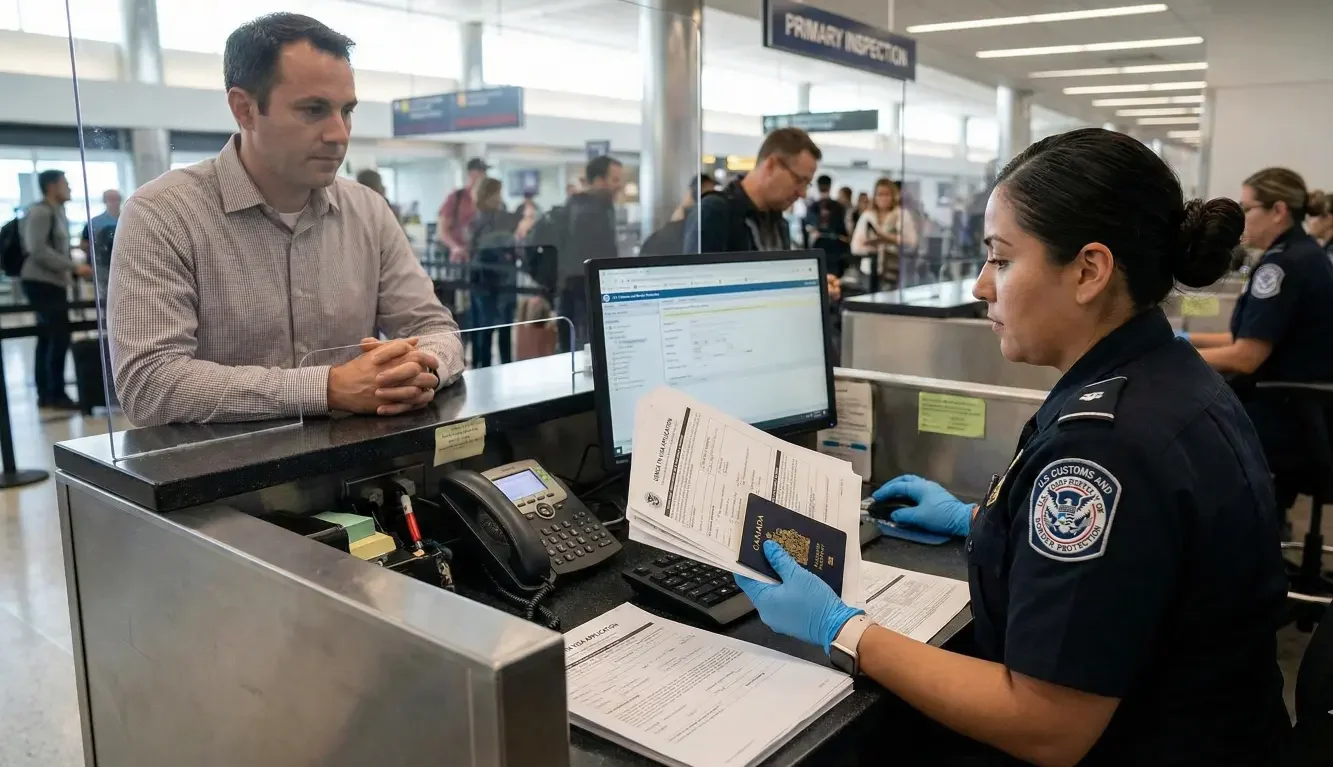
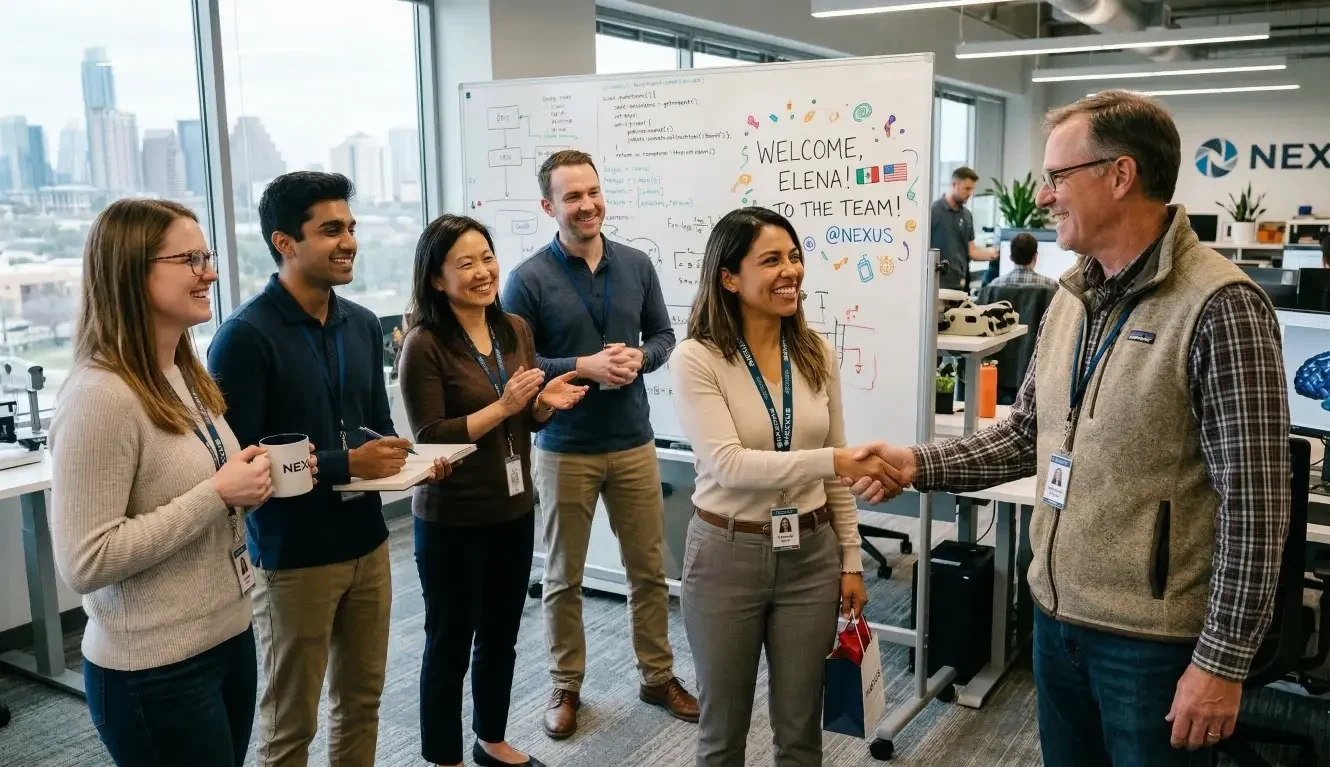
When a plant decides to hire an engineer from outside the United States, the decision usually starts with an operational problem, not an immigration one.
A controls upgrade is behind schedule. A tooling issue keeps resurfacing on the line. A new piece of equipment is arriving in eight weeks, but the plant still has no one with the right commissioning experience. Domestic recruiting has dragged on, internal teams are stretched, and leadership wants the gap closed before it starts affecting output, quality, or launch timing.
At that point, international hiring can look like the practical answer. In many cases, it is. The challenge is that the hiring decision and the operational timeline often move faster than the work authorization process, documentation requirements, and cross-functional coordination needed to bring that engineer onboard smoothly.
That is why cross-border engineering hiring is rarely just a recruiting task. For plant leaders, it is a timing, planning, and continuity issue. The real risk is not simply whether the company can find talent abroad. The real risk is whether the plant can build enough visibility into the process to avoid start-date surprises, compliance interruptions, and avoidable disruption on the floor.
We provide you with a cross-border engineering hiring risk map.
The Real Challenge Behind Cross-Border Engineering Hiring
Plants usually do not start exploring international engineering hiring because it sounds innovative. They do it because the usual options are no longer solving the problem fast enough.
Maybe the plant has spent months trying to fill a process engineer role tied to yield improvement. Maybe an automation engineer is needed for a line expansion, but the domestic candidate pool has been thin. Maybe a quality or manufacturing engineer is needed to stabilize a launch, and the team can no longer rely on overtime, temporary consulting support, or borrowed help from another site.
In those situations, hiring engineers from abroad can widen the talent pool and improve the odds of finding the right technical fit. But the operational risk often shifts from talent identification to execution.
From a plant manager’s perspective, that execution risk tends to show up in a few familiar ways:
A project plan assumes a start date that is not yet realistic.
A production leader believes the role is “filled” because a candidate accepted, even though work authorization steps are still unresolved.
Operations, HR, recruiting, and immigration support are working toward the same goal, but not from the same timeline.
The plant builds its labor plan around an arrival date that still has too many moving parts.
This is where many cross-border hiring efforts become harder than expected. The technical need may be clear. The candidate may be strong. The budget may be approved. But without clear visibility into the path from offer acceptance to day one onsite, the plant can still end up exposed.
For plant leaders, that means the problem is not whether international engineering hiring can work. It is whether the process is being managed as part of operational planning rather than treated as an administrative detail downstream.
A Typical Scenario: When a Plant Decides to Hire an Engineer Abroad
Imagine a U.S. manufacturing plant preparing for a major equipment installation. The launch window is firm. The existing engineering team is capable, but already overloaded with line support, process troubleshooting, and ongoing improvement work. The plant needs an engineer with specific automation and commissioning experience, and domestic recruiting has not produced the right fit.
Leadership begins to look internationally.
At first, the move feels straightforward. The hiring team identifies a candidate with relevant experience in manufacturing automation, industrial controls, and startup support. Interviews go well. The technical manager is confident. The plant starts mentally attaching this person to the project plan.
The moment leadership decides to look internationally
This is the point where the operational story and the immigration story begin to overlap, whether the plant recognizes it or not.
From the plant’s point of view, the need is immediate. There is already a business reason for the hire. The new engineer is expected to reduce pressure on the current team, support launch readiness, and close an expertise gap that is affecting execution.
But from this moment forward, the question is not only, “Is this the right engineer?”
It becomes, “What has to happen between now and the day this person can actually begin contributing?”
That difference matters. Plants often move from candidate selection to internal scheduling assumptions too quickly. Once managers start counting on a hire, the role gets baked into timelines, staffing models, and project expectations.
Where operational expectations begin to form
This is where risk starts accumulating quietly.
Someone assumes the engineer will be present for equipment acceptance testing.
Someone else expects the new hire to own process documentation updates in the first month.
A production manager assumes the current team only needs to “hold the line” for a few more weeks.
These assumptions may feel reasonable, but they are still assumptions. If the visa pathway, documentation needs, or onboarding logistics are not clearly mapped, the plant can start planning around a date that is not yet reliable.
That does not mean the plant should avoid international hiring. It means the plant should resist the temptation to convert a promising candidate into an operational certainty too early.
Risk #1: Misaligned Hiring and Visa Timelines
The first major risk in cross-border engineering hiring is timeline mismatch.
Operational hiring timelines are usually driven by business pressure. A plant needs support before a launch milestone, before a capital project reaches the next phase, or before engineering backlog starts affecting uptime. In that environment, teams naturally focus on speed.
Work authorization processes do not always follow that same rhythm.
A candidate may be identified quickly. Interviews may move fast. Internal approval may happen within days. But the legal ability for that person to begin working in the United States depends on steps that are separate from the plant’s urgency. Documentation review, case preparation, filing, processing, and travel coordination may each influence when the hire can truly start.
That is where misalignment begins.
A plant may view the role as nearly complete because the candidate has accepted. In reality, the operational clock and the immigration clock are still running on different tracks.
This creates several downstream issues:
Project leaders may stop looking for temporary backup too early.
Engineering managers may reduce contingency planning because they believe help is already secured.
Leadership may communicate start expectations internally before enough variables have been resolved.
The practical lesson is simple: an accepted offer is not the same as a confirmed start date.
For plant leaders, one of the healthiest disciplines is separating these milestones clearly. Candidate selected. Pathway confirmed. Documentation underway. Approval status known. Travel and onboarding aligned. Start date validated.
That kind of milestone thinking creates more realistic planning and reduces the chance that the plant is caught off guard later.
Risk #2: Compliance Surprises Mid-Process
The second risk is not always visible at the beginning because it often looks like paperwork rather than operations. But when compliance issues emerge mid-process, they can affect the schedule as directly as a late part delivery or a missed engineering signoff.
Plant leaders do not need to become immigration specialists to understand this risk. They only need to recognize that employer visa programs typically require documentation, review, and process discipline. If something important is misclassified, incomplete, or delayed, the timeline can shift.
A few examples illustrate the point.
The plant may describe the role too loosely, creating confusion about responsibilities, reporting structure, or technical scope.
Supporting documents may take longer to gather than expected because different teams hold different pieces of information.
An employer may underestimate how much coordination is needed between operations, HR, legal support, and the outside partner guiding the case.
None of these issues sound dramatic on paper. But operationally, they matter because they introduce resets. A process that looked like it was moving can suddenly pause while information is clarified or additional materials are prepared.
This is why plant leaders should not treat compliance as something that happens “in the background.” It is part of execution risk.
The best mindset is not fear. It is preparedness.
A plant that expects documentation needs, responds quickly to requests, and keeps the role definition consistent is usually in a stronger position than a plant that treats the process as a black box and waits for updates only when something goes wrong.
In practice, that means someone should own visibility. Not every detail, but visibility. Who is coordinating? What stage is the case in? Are there outstanding documents? Is there anything that could affect timing?
Without that visibility, mid-process surprises tend to feel sudden, even when they were predictable.
Risk #3: Start Date Uncertainty and Production Planning
For a plant leader, uncertainty is often harder to manage than delay.
A delayed start can sometimes be absorbed if the timeline is understood early enough. A vague or shifting start date is more disruptive because it makes operational planning unstable. Teams do not know whether to hold, escalate, extend temporary support, or change priorities.
This is where cross-border engineering recruitment becomes a plant management issue, not just a hiring issue.
Consider a few common operational consequences:
A commissioning plan assumes technical support that may not be available yet.
Continuous improvement work is postponed because current engineers are still stuck covering urgent plant support.
A process engineering backlog grows while the team waits for reinforcement.
Supervisors and engineering leads keep redistributing workload week by week, which can increase fatigue and lower consistency.
The contrarian truth here is important: the biggest risk is not hiring internationally. The bigger risk is hiring internationally without timeline visibility.
When plant leaders hear “international hiring,” they may initially think the danger lies in complexity. But complexity can be managed. What creates real disruption is building production or project assumptions around dates that have not been pressure-tested.
A better approach is to plan in ranges and readiness gates.
Instead of treating a projected start date as fixed too early, the plant can ask:
What is the earliest realistic contribution point?
What work can be held for the new engineer, and what work still needs a backup plan?
If timing shifts, which project tasks are most exposed?
What short-term support is needed until the hire is fully active?
These questions do not slow the process down. They make the process more resilient.
Risk #4: Onboarding and Operational Integration
Even when approval moves smoothly, the engineer’s value does not begin the moment the paperwork clears. There is still the practical matter of integration.
For plant leaders, this is an easy place to underestimate friction. The assumption is often that once the engineer arrives, the problem is solved. But in real operations, the gap between arrival and useful contribution can still be meaningful if onboarding is not ready.
Relocation timing may affect when the engineer is truly settled and able to focus. Internal systems access may not be fully prepared. Training documents may still be scattered. The team may not have aligned on what the first two weeks should actually look like.
That matters even more in plant environments where the role is tied to live operations, safety-sensitive processes, tight production schedules, or specialized equipment.
A strong onboarding plan should answer practical questions:
Who owns the first week of integration?
What systems, credentials, and documents need to be ready before arrival?
What technical priorities should the engineer focus on first?
Who is responsible for transferring process knowledge?
What expectations are realistic for the first thirty days?
This is especially important when the plant has hired the person to solve an urgent problem. Urgency can create the temptation to throw the engineer directly into firefighting. Sometimes that is unavoidable, but it still helps to structure the ramp-up so the new hire can contribute without losing time to preventable confusion.
In other words, the hiring effort is not complete when the case is approved. It is complete when the engineer is positioned to contribute with minimal operational drag.
Common Mistakes Plants Make When Hiring Engineers Internationally
Several patterns show up repeatedly when plants struggle with international engineering hiring.
The first is treating immigration as an administrative handoff after the recruiting work is done. In reality, recruiting and mobility planning often need to move together. The strongest candidate does not reduce risk if the pathway is not considered early.
The second is starting too late. Plants sometimes begin exploring cross-border hiring only after the operational pain has become acute. By then, leaders are trying to solve a structural staffing issue on an emergency timeline, which increases pressure and narrows room for contingencies.
The third is underestimating documentation needs. Teams may assume the process only requires a few forms and signatures, then discover that supporting materials, role clarification, or internal coordination take more time than expected.
The fourth is failing to align HR, operations, and legal or immigration support. Each group may be acting in good faith, but if they are not working from the same timeline and assumptions, small disconnects can become bigger delays.
Another common mistake is overcommitting internally before the process has enough certainty. This can create pressure on managers and frustration across the plant when timelines move.
None of these mistakes mean the company should avoid international hiring. They simply reinforce that cross-border engineering hiring should be managed like any other operationally sensitive initiative: with milestones, owners, dependencies, and fallback options.
How Plant Leaders Can Reduce Cross-Border Hiring Risk
The good news is that most of these risks can be reduced. Not eliminated entirely, but reduced through better planning and better coordination.
Align hiring timelines with immigration timelines
The first step is to stop treating the operational need date and the likely work authorization timeline as interchangeable. They are related, but not the same.
As soon as the plant begins serious international hiring discussions, leadership should build a more realistic view of process timing. That does not require exact certainty. It requires honest planning. If the hire is expected to support a commissioning window, launch phase, or process improvement target, the plant should map the timing risk early and decide what backup support is needed.
Confirm visa pathway early
A plant does not need to master program details, but it does benefit from confirming the likely pathway early in the process. That helps set expectations before the team becomes overly committed to a date or a candidate scenario that may require more coordination than expected.
Early pathway clarity also helps avoid wasted motion. The sooner the plant understands what kind of process is likely involved, the sooner it can organize documents, internal owners, and communication around a realistic plan.
Coordinate recruiting and mobility planning
This is one of the biggest leverage points.
International engineering hiring works better when talent acquisition and immigration planning are not treated as separate lanes. A plant may have a strong recruiter and a strong mobility or legal support partner, but if those functions are not aligned, timing gaps can still appear.
Operationally, the handoffs matter. When was the candidate selected? When was the role definition finalized? What still needs employer input? Who is responsible for responding? Coordination creates fewer surprises.
Prepare onboarding before arrival
A plant should assume that the first week matters. So does the first month.
If the engineer is being hired to solve a real operational problem, do not wait until arrival to define the ramp-up. Prepare system access, reporting structure, technical priorities, documentation, and plant-specific context ahead of time. That reduces friction and allows the hire to begin contributing sooner.
What Evidence or Signals to Look For When Evaluating International Hiring Support
Not every support partner approaches international hiring with the same level of operational awareness. For plant leaders, that matters.
A useful partner should be able to connect immigration support to workforce planning, not treat it as a purely administrative service disconnected from plant realities. The plant does not just need forms processed. It needs visibility.
A few signals are worth paying attention to.
First, look for experience supporting employer visa programs in a business context. The process should feel organized around employer needs, not only individual case mechanics.
Second, ask how timelines are communicated. A strong process usually includes clear stages, expectations, and known dependencies rather than vague reassurance.
Third, look for structured intake. If the support model begins with a thoughtful case evaluation, that can be a good sign. It suggests the process is being assessed before assumptions are made.
Fourth, notice whether the partner can speak the language of workforce planning. A plant leader should be able to discuss timing, role scope, coordination needs, and business impact without having to translate everything into legal terminology.
Finally, evaluate how well the process supports visibility across teams. The best support model is not one that promises perfection. It is one that helps the company understand where the case stands, what is needed next, and what could affect timing.
Planning Cross-Border Engineering Hiring With Greater Predictability
Cross-border engineering hiring can absolutely be a practical solution for U.S. manufacturers facing talent gaps. But for plant leaders, the decision works best when it is managed as an operational planning exercise, not just a recruiting event.
The candidate may be excellent. The need may be urgent. The business case may be obvious. Still, the difference between a smooth hire and a disruptive one often comes down to whether the plant mapped the risk early enough.
That means recognizing that timing matters as much as talent. It means separating candidate selection from confirmed readiness. It means planning for documentation, coordination, onboarding, and backup coverage before the plant is forced into reactive decisions.
The most effective plants do not wait until something slips to realize the process needed more structure. They build that structure from the start.
If your plant is considering international engineering hiring, the goal is not to eliminate every unknown. It is to reduce preventable ones. With better visibility, stronger coordination, and a more realistic timeline, hiring engineers from abroad can become far more predictable than many teams expect.
If your plant is considering hiring engineers from outside the U.S., the first step is understanding the immigration pathway and timeline. A structured case evaluation can clarify visa options, documentation requirements, and expected deployment timelines.
Request a free case evaluation to explore how international engineering hires can fit into your workforce planning.
FAQ Content
What risks should plant managers consider when hiring engineers internationally?
Plant managers should focus on timing risk, documentation risk, start-date uncertainty, and onboarding friction. The technical fit of the candidate matters, but the operational impact often comes from whether the plant has aligned hiring plans, work authorization timing, and production needs early enough.
How long can it take to bring an engineer to the U.S. from another country?
The timing can vary based on the pathway, documentation readiness, and case-specific factors. For plant leaders, the important point is that projected hiring dates and actual work authorization timelines are not always the same, so staffing plans should allow for some uncertainty until the process is more clearly defined.
What visa options exist for hiring engineers internationally?
There are multiple employer visa programs that may be relevant depending on the role, employer situation, and candidate profile. The best starting point is usually a case-specific evaluation so the company can understand which pathway may fit before locking in assumptions about timing.
Why do international engineering hires sometimes face start-date delays?
Start-date delays often happen because recruiting timelines move faster than documentation, process coordination, or work authorization timelines. Delays can also come from incomplete information, late process starts, or disconnects between operations, HR, and immigration support.
How can manufacturing plants reduce risk when hiring foreign engineers?
Plants can reduce risk by confirming the likely pathway early, aligning internal timelines with realistic process expectations, coordinating recruiting and immigration planning, and preparing onboarding before the engineer arrives. Visibility and timing discipline usually matter more than speed alone.
What should companies prepare before starting an international engineering hire?
Companies should be ready to define the role clearly, identify internal owners, gather supporting documents, think through likely timing needs, and decide how the plant will manage workload if the hire does not start as quickly as hoped. A structured case evaluation can help organize those steps.
Request a Free Case Evaluation
Speak with a Global Workforce Specialist
If your plant is considering hiring engineers from outside the U.S., the first step is understanding the immigration pathway and timeline. A structured case evaluation can clarify visa options, documentation requirements, and expected deployment timelines.
Request a free case evaluation to explore how international engineering hires can fit into your workforce planning.
RELATED LINK:
U.S. Bureau of Labor Statistics — Architecture and Engineering Occupations