
Why Croatia Digital Nomad Visa Could Be Your Next Big Move
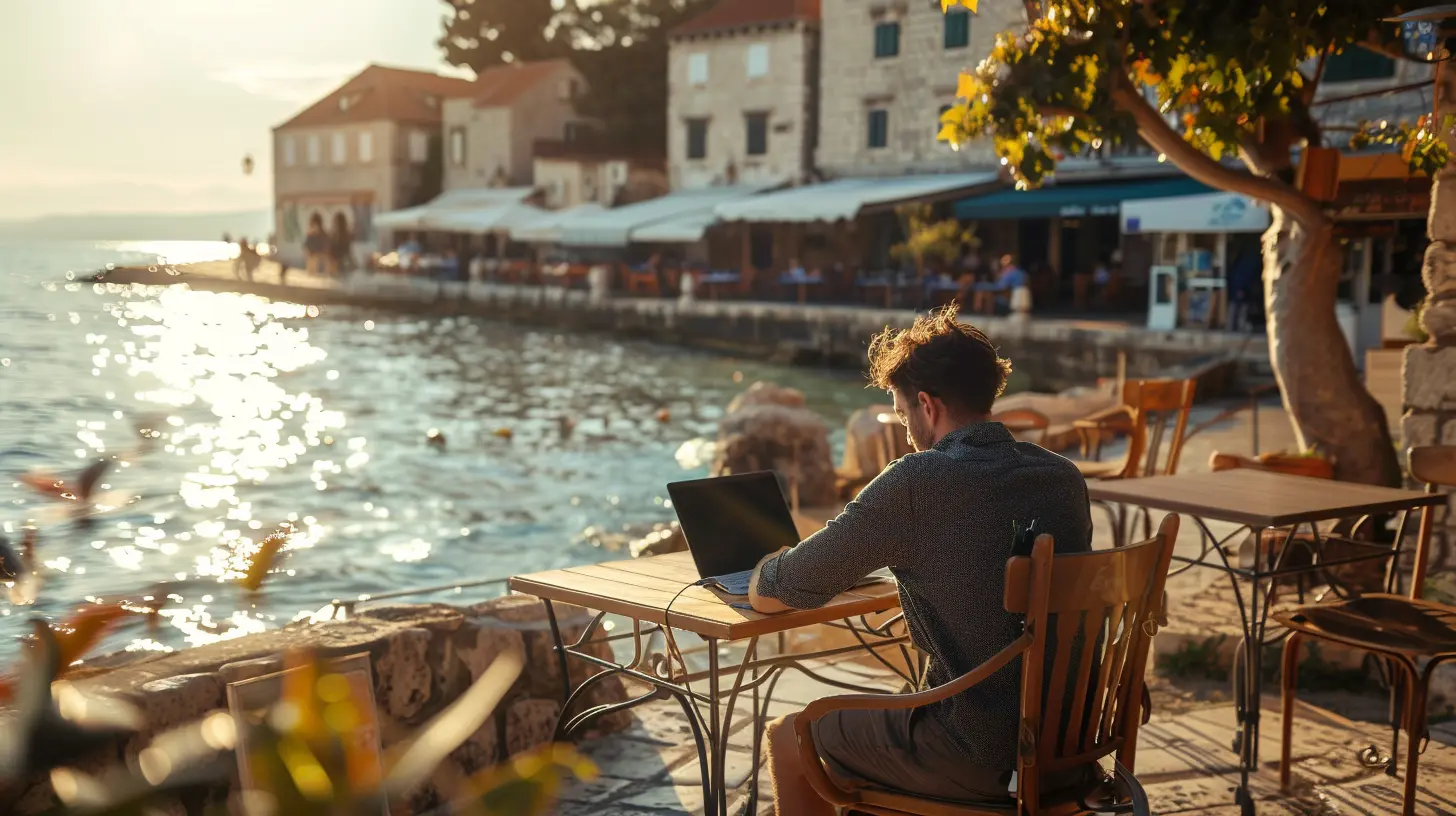
You sip a café latte in Split, footsteps echoing off centuries-old stone walls. The Adriatic breeze drifts across your laptop keyboard as you push your daily deliverables. Your “office” today is a rooftop terrace overlooking shimmering sea. This isn’t a vacation—it’s your new rhythm, your remote life choice. And for non-EU nationals, Croatia’s Digital Nomad Visa is opening that door.
In this article, we’ll dig deep: what the visa is, who qualifies, step-by-step how to apply, the taxation and legal nuances, and practical tips for making Croatia your home base for remote work. Whether you’re a freelancer, remote employee, or entrepreneur, you’ll see exactly how this can benefit you—and how to navigate pitfalls. Let’s go on this journey together.
Why Croatia Stands Out
Globally, digital nomad visas are proliferating—Portugal, Germany, Greece, Costa Rica, and more. But few offer the blend of European access, Adriatic charm, and favorable tax treatment that Croatia does. Even better: the Croatian government built this permit for remote work, with income earned abroad largely exempt from Croatian income tax (subject to specific rules).
Many remote workers dream of living in Europe without jumping into the complexity of full residency or relocation. Croatia straddles that sweet spot: you get a legal residence permit (temporary) dedicated to your work style, not tied to local employment, while enjoying European infrastructure, travel options, culture, and lifestyle.
In short: Croatia offers you “remote work with freedom and European reach.”
What Is the Croatia Digital Nomad Visa?
Definition and Purpose
Croatia’s Digital Nomad Visa (officially termed as the temporary stay permit for digital nomads) targets third-country nationals (non-EU/EEA/Swiss) desiring to live in Croatia while working remotely for foreign companies or clients. This visa allows legal residence in Croatia for a defined period (often up to 18 months under current rules) while earning income from outside Croatia. It’s specifically tailored for remote workers, freelancers, and entrepreneurs whose clients or employers are not Croatian. The Croatia Digital Nomad Visa provides an excellent opportunity for those looking to balance work and life in a stunning environment.
Eligibility: Who Can Apply?
General Criteria
- Non-EU/EEA/Swiss citizenship: The permit is reserved for third-country nationals.
- Remote work / self-employment outside Croatia: Your work or business must be legally external to Croatia (your employer or clients are not based in Croatia).
- Valid passport: Typically valid beyond the period of your stay.
- Clean criminal record: Background certificate (often legalized/apostilled).
- Health insurance: Policy valid in Croatia covering your entire stay.
- Proof of accommodation: Lease, rental agreement, long-stay booking, or property title.
Financial / Income Requirements
You must show you can support yourself (and dependents) without relying on Croatian employment or state support.
- Minimum monthly income: Approximately €3,295 per month (recent references).
- Or savings: For 12 months, roughly €39,540; for 18 months, roughly €59,310.
- Evidence: Bank statements and/or payslips demonstrating stable income meeting the threshold.
Note: Earlier sources cited somewhat lower thresholds, but more recent guidance tracks to Croatia’s average salary metrics. Always verify the latest figure before applying.
Additional Rules & Limitations
- You cannot work for a Croatian employer or perform services for Croatian clients under this permit.
- The permit is often treated as non-renewable; after it ends, you may need to exit and wait ~6 months before reapplying.
- The exemption applies to foreign-sourced income from your remote work recognized under the permit; other income categories (e.g., Croatian-source income, dividends, real estate) may be taxable.
How to Apply: Step by Step
Laura’s Backstory (A Practical Illustration)
Laura lives in Argentina, works remotely for a Canadian agency, and has always dreamed of the Adriatic. She earns about €3,500 monthly, books a long-stay rental in Dubrovnik, compiles payslips and bank statements, obtains comprehensive health insurance, and legalizes her background check. She applies through the Croatian consulate in Buenos Aires, responds to a quick follow-up for additional documentation, and receives approval. She relocates, registers locally, and begins her year by the sea—legally and stress-free.
Step 1: Decide Where to Apply
- Embassy/Consulate: Apply before traveling, especially if you need a visa to enter Croatia at all.
- Online: In some cases, a digital application route is available.
- In Croatia: If you enter visa-free or on a tourist visa, you may submit at a local police/foreigners’ office.
Step 2: Gather & Organize Documentation
- Completed application forms.
- Valid passport + photocopies.
- Passport photos (specs per local requirements).
- Proof of remote work (employment letter, contracts, client agreements).
- Bank statements/payslips proving income or a savings letter meeting thresholds.
- Health insurance valid in Croatia for the full duration.
- Clean criminal record (apostilled/legalized if required).
- Proof of accommodation (lease, long-term booking, etc.).
- Certified translations into Croatian or English where required.
Step 3: Submit the Application
Submit via your chosen route (consulate/online/in-country). Keep digital copies of everything. Processing times vary but are commonly around 30 days; follow up promptly when requested.
Step 4: Wait & Follow Up
Monitor emails/notifications, respond to any requests for clarification, and plan travel timing. Once approved, you’ll receive a temporary residence permit that allows local registration and long-stay living in Croatia.
Benefits & Advantages: What Makes It Worth It?
1) Income Tax Exemption (Within Limits)
One of the biggest draws is Croatia’s treatment of digital nomad income: foreign-sourced income related to your qualifying remote work is typically exempt from Croatian income tax while you hold the permit. This does not automatically make you tax-free everywhere—you may still have obligations in your home country. And if other income types are involved (e.g., Croatian-source income), local tax may apply.
2) Legal Stability & Peace of Mind
Stop worrying about tourist-visa hops or overstays. The digital nomad permit provides residence rights and clear rules, letting you open accounts and access services while enjoying legal certainty.
3) European Access & Travel Perks
Base yourself in Croatia and enjoy proximity to Central Europe and the Balkans. Weekend trips become simple, as does attending conferences and meetups across the region.
4) Lifestyle & Culture
Think sun-kissed coasts, historic walled cities, national parks, and a thriving café culture. Major hubs like Zagreb, Split, Dubrovnik, and Rijeka offer modern infrastructure and coworking scenes. Costs are typically lower than Western Europe.
5) Longer-Term Possibilities
While the permit is temporary, it’s a gateway to understanding Croatia and planning future steps. Over time, with the right pathways and continuity, some may explore long-term residency options (subject to separate rules and eligibility).
Pitfalls, Risks & Caveats (So You Don’t Get Surprised)
1) Changing Rules
Immigration and tax rules evolve. Some 2025 commentaries discuss longer stay possibilities in certain contexts. Confirm the most current rules with official sources before applying.
2) Tax Residency & Domicile Risk
Staying beyond 183 days or maintaining a fixed abode could trigger domestic tax residency considerations. Even with a digital nomad exemption for specific work income, broader tax obligations might arise. Consult advisors familiar with Croatian law and your home-country rules/treaties.
3) Non-Renewability
In many interpretations, the permit cannot be renewed directly. Expect to leave Croatia at the end of your term and wait roughly six months before applying again.
4) Limited Scope of Exemption
The exemption focuses on foreign-sourced income arising from the remote work underpinning your permit. Income from other sources may be taxable.
5) Documentation Scrutiny
Weak evidence, translation issues, or insufficient funds can delay or derail your application. Over-prepare, certify, and translate as needed.
Stories & Data: Real Users & Trends
While broad official statistics are limited, legal commentary and expat experiences indicate growing adoption. The program’s combination of European location and specific tax treatment has placed Croatia among the more attractive options for remote professionals seeking medium-term residence.
How to Make It Work: Tips & Best Practices
- Consult a tax expert in your home country before departure—understand filing and payment obligations (e.g., U.S. citizens must file U.S. taxes regardless of residence).
- Document diligently: bank statements, contracts, translations, apostilles, and backups.
- Track your timeline: don’t overstay your term; plan exits and any reapplications.
- Avoid local Croatian clients/employers while on this permit.
- Separate income sources clearly to avoid confusing the tax position.
- Budget for gaps if you must leave before reapplying.
- Monitor rule changes in 2025 and beyond; rely on official updates.
- Build community via coworking spaces, expat and nomad groups.
- Stage your relocation: use short-term rentals first, then secure long-term housing.
- Prepare contingencies for legal assistance, buffer funds, or unexpected tax exposure.
Comparing Croatia’s Visa to Other Digital Nomad Visas
| Feature | Croatia Digital Nomad | Typical Elsewhere |
|---|---|---|
| Maximum Stay Window | Often up to ~18 months (verify latest) | Many limit to 6–12 months |
| Income Tax on Foreign Remote Work | Exemption generally available under the permit (scope-limited) | Often reduced rates or standard taxation |
| European Access | Excellent regional proximity and connectivity | Varies by country/program |
| Renewal | Commonly non-renewable; exit + wait to reapply | Some programs allow extensions |
| Lifestyle | Adriatic coast, historic cities, affordable living | Varies widely |
Miguel’s Leap to Dubrovnik
Miguel, an e-commerce consultant from Mexico, craved a stable European base. The Croatia Digital Nomad Permit fit perfectly. Earning ~€4,000 monthly through U.S. clients, with clean records and health insurance, he applied from Mexico, secured approval, and moved to a sea-view apartment in Dubrovnik. Over the year, he explored Dalmatian islands, joined nomad meetups, and took weekend trains to Slovenia and Italy. When his term ended, he left, observed the waiting period, and reapplied—this time aiming for Split. For Miguel, the move was bold but seamless thanks to preparation and the clarity of Croatia’s framework.
Checklist for Your Application
- Confirm non-EU/EEA/Swiss status
- Verify all income is foreign-sourced and remote
- Meet or exceed income/savings thresholds
- Ensure passport validity
- Obtain clean, legalized criminal record
- Secure comprehensive health insurance
- Arrange proof of accommodation
- Translate documents where necessary
- Complete forms accurately
- Submit via consulate/online/in-country office
- Respond promptly to follow-ups
- Register locally after approval
FAQs
Can I bring my family?
Family reunification (spouse/children and, in some cases, unmarried partners) may be possible under separate family rules. Prepare relationship proofs and ensure insurance and funds cover dependents.
How much are the fees?
Fees vary by consulate and route, commonly ranging roughly between €80 and €200. Confirm exact amounts with the office handling your application.
Can I travel in and out during my stay?
Yes, but follow Croatian immigration rules and ensure your permit and registration remain valid.
Does this make me a Croatian tax resident?
Not automatically. However, long stays (e.g., 183+ days) or maintaining a fixed abode may trigger tax residency considerations. Seek tailored advice.
Is renewal possible?
In many cases, no. Expect to exit Croatia at the end of your permit and wait around six months before reapplying.
What about social security?
The permit does not generally grant Croatian social security benefits. You remain responsible for any home-country contributions and international coverage.

Next Steps
- Verify the latest official rules from Croatia’s Ministry of Interior before applying.
- Consult a cross-border tax advisor regarding filing/payment obligations.
- Gather, legalize, and translate your documents early.
- Time your travel to align with expected processing windows.
- Scout Croatian cities/regions that fit your work style and budget.
- Budget a contingency fund for delays or reapplications.
- Stay flexible and updated on policy changes.
3A Immigration Services: Your Partner for a Smooth Move (CTA)
If you’d like help navigating the Croatia Digital Nomad Visa—from verifying eligibility and preparing documents to coordinating translations and addressing tax questions—3A Immigration Services can guide you end-to-end. Our team supports remote professionals worldwide to build strong, compliant applications that maximize approval odds. Contact us for a free eligibility assessment and let’s design your path to an Adriatic lifestyle.
Croatia’s Digital Nomad Visa is a compelling bridge between remote work freedom and European lifestyle. For non-EU remote professionals, it offers legal stay, targeted tax relief on foreign remote income, and access to an idyllic, historically rich, well-connected country. But success favors the prepared: satisfy eligibility, structure your income smartly, and keep an eye on evolving rules.
If you carefully weigh pros and cons, stay alert to updates, and assemble a strong file, Croatia can be the perfect springboard for your next chapter. Imagine Zoom calls from a seaside terrace, wandering medieval streets after work, and taking quick trips across Europe—all while keeping your remote career humming. That dream is within reach.
RELATED SOURCES
- Temporary stay of digital nomads – MUP
- Do Digital Nomads Pay Tax in Croatia?
- Croatia Digital Nomad Visa (Remote Work)
- Croatia: A New (Tax-Free) Promised Land for Digital Nomads? (Part I)