
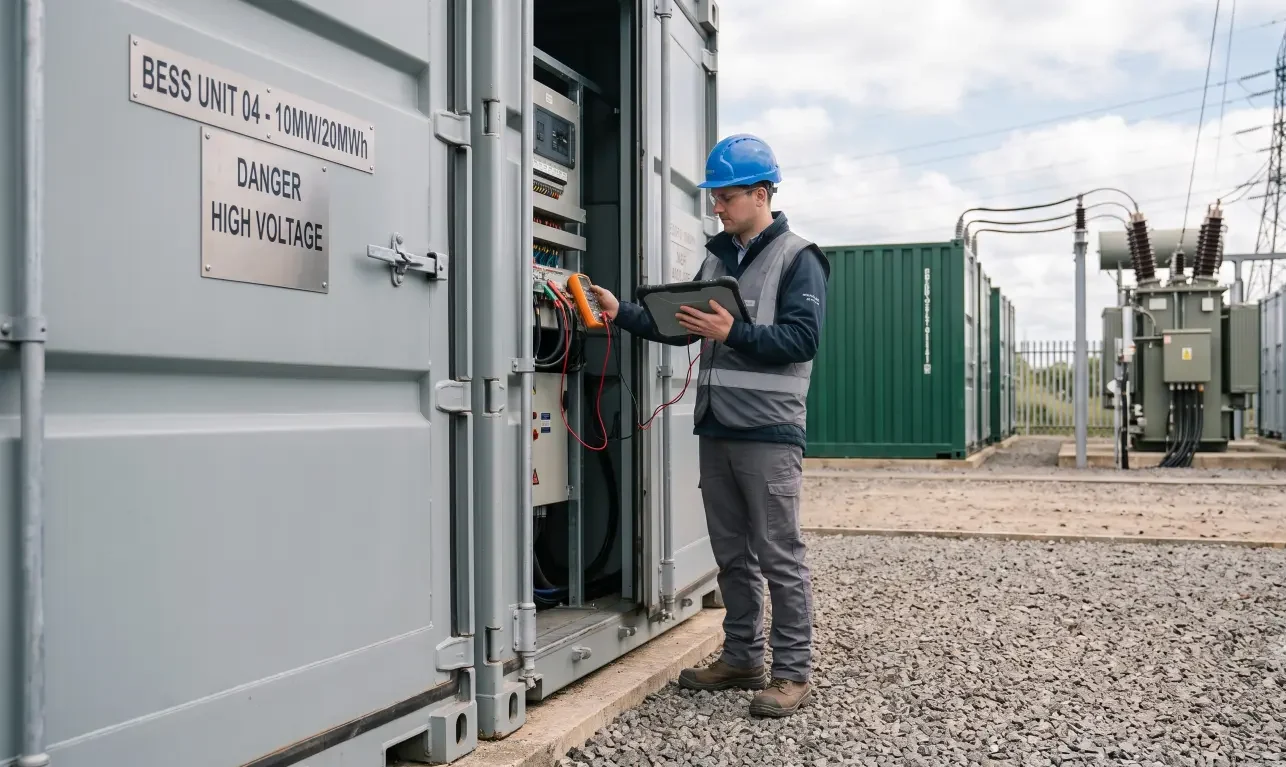
A field service engineering role can look straightforward to an operations team: send a qualified technical employee to customer sites, support installations, troubleshoot equipment, commission systems, and keep projects moving. But when the role involves TN planning, travel-heavy work can raise practical questions that should be resolved before the case is built.
The issue is not simply whether the employee is talented or whether the company needs support in the field. Employers also need to explain what the person will do, where the work will happen, who controls the work, how client-site access is handled, and how the duties fit the intended TN professional category. For engineering managers in controls, automation, manufacturing, industrial systems, and technical service environments, those details matter.
This article explains the travel and site-access questions teams should resolve early when evaluating a TN field service engineer role. It is not legal advice, and it does not guarantee TN eligibility, admission, approval, or site access. It is a planning framework for employers that want fewer surprises before a travel-heavy technical role becomes an edge case.
Why Travel-Heavy TN Roles Need Early Planning
Many technical roles are no longer performed at one desk or one plant. Field service engineers may visit customer facilities, integration sites, manufacturing plants, warehouses, data centers, labs, utilities, or construction-adjacent environments. They may support installation, startup, diagnostics, testing, controls tuning, preventive maintenance, training, or technical escalation.
That mobility is normal from a business standpoint, but it can make immigration planning more complex. A support letter or job description that only says “field service engineer” may not be enough to explain the real work. The employer may need to clarify the professional duties, the purpose of travel, the relationship to client sites, and the temporary nature of the assignment.
The earlier those facts are organized, the easier it is to assess whether the role can be presented cleanly and whether any details need closer review.
The First Question: What Is the Actual Technical Role?
Job titles can be misleading. One company’s field service engineer may perform advanced controls troubleshooting and commissioning. Another company’s field service engineer may primarily perform mechanical repair, equipment installation, technician-level maintenance, or customer support. TN planning should start with actual duties, not the title.
The employer should define the technical function in plain language. Is the employee applying engineering principles? Are they diagnosing system behavior? Are they configuring PLCs, robotics, automation cells, sensors, industrial controls, electrical systems, or mechanical assemblies? Are they preparing technical reports? Are they supporting design changes, validation, or commissioning?
A strong role description explains the professional-level work with enough detail for an outside reviewer to understand why the position fits the intended category.
Travel Does Not Replace the Need for Role Clarity
Travel is a work pattern, not a professional category. A role can involve heavy travel and still be eligible for planning if the underlying duties are professional and well documented. But travel can also blur the picture if the job description reads like general service, repair, or installation support.
Engineering managers should separate the travel pattern from the technical duties. For example, “travel to customer sites” should be followed by a clear explanation of what happens at those sites. Does the employee perform system analysis? Review technical drawings? Troubleshoot controls logic? Validate equipment performance? Coordinate commissioning steps? Document findings for engineering teams?
If the answer is vague, the role may need more scoping before it is ready for immigration review.
Who Is the Employer, and Who Controls the Work?
Client-site access creates one of the most important planning questions: who is directing the employee’s work? In many field service roles, the employee is assigned by the U.S. employer but works at customer facilities. That arrangement can be workable from a business perspective, but the facts should be clearly documented.
Employers should identify the actual employer, reporting manager, work assignments, performance review process, and supervision structure. The support package should avoid making the worker look like they are being hired by the client or moved among unrelated third-party employers without a clear employer-controlled assignment.
A simple internal question helps: if the customer site changes, does the worker still report to the same employer and perform the same professional function? If so, the documentation should make that structure easy to understand.
What Client-Site Access Rules Apply?
Site access is not only an immigration issue. It can also involve customer security rules, safety training, badging, non-disclosure agreements, background checks, drug screening, export-control review, plant access, union-site rules, or project-specific onboarding. These requirements can affect timing and work planning.
Before travel begins, the employer should know which sites require access approvals, how long those approvals take, what documents are needed, and whether any restrictions apply to foreign nationals. For sensitive environments, teams may need to involve legal, HR, compliance, security, and the customer’s access team.
Resolving these questions early prevents a situation where immigration planning and site-access planning move on separate tracks and collide later.
Where Will the Work Actually Happen?
A travel-heavy role may include a home base, headquarters, customer sites, temporary project locations, warehouses, plants, and remote work. The employer should map the expected work pattern as clearly as possible.
Helpful questions include: What is the primary work location? Which customer sites are expected? How often will the employee travel? Are visits planned or emergency-based? Will the employee cross state lines? Will they support multiple customers? Are any locations outside the United States? Will travel be short-term, rotating, or tied to specific projects?
The goal is not to predict every service call perfectly. The goal is to describe the normal business pattern so the role does not appear undefined.
Are the Duties Consistent Across Sites?
For TN planning, consistency can matter. If the employee performs the same professional technical function across multiple client sites, the case may be easier to explain. If duties change dramatically from site to site, the role may require more analysis.
For example, a controls-focused field service engineer may travel to different plants to commission automation equipment, troubleshoot PLC issues, validate system performance, and document technical findings. That is a consistent technical function across changing locations.
By contrast, if one site expects engineering analysis, another expects equipment installation, another expects general maintenance, and another expects production labor, the role becomes harder to describe. Employers should resolve those duty differences early.
What Tools, Systems, and Technologies Will the Employee Use?
Technical detail helps explain a field service role. Employers should identify the tools, platforms, and systems the employee will use. For controls and automation roles, that may include PLC platforms, HMI systems, robotics, industrial networks, electrical schematics, test equipment, diagnostic software, commissioning checklists, machine vision, sensors, drives, or SCADA-related tools.
For mechanical or equipment-focused roles, the documentation may include system types, diagnostic tools, design drawings, performance standards, test procedures, and technical reporting methods. For electrical roles, it may include schematics, panels, test instruments, safety protocols, and commissioning procedures.
The point is not to overload the case with jargon. The point is to show that the work is professional, technical, and aligned with the stated role.
How Will the Employee Report Findings?
Field service work often produces deliverables. These may include service reports, commissioning reports, root-cause analyses, test results, corrective action recommendations, customer technical notes, engineering feedback, punch lists, or project closeout documentation.
Employers should define those deliverables before preparing the role description. If the employee only “fixes equipment,” the role may sound less professional than it is. If the employee evaluates system performance, identifies technical causes, recommends adjustments, documents findings, and escalates design or control issues, the role is easier to understand.
A clear reporting process also helps explain supervision, employer control, and the connection between field work and engineering operations.
What Is the Difference Between Engineering Work and Technician Work?
Some field service roles sit near the boundary between engineering and technician work. That is why the duties need careful review. Engineering work may involve analysis, design input, technical decision-making, troubleshooting complex systems, commissioning, validation, and applying engineering principles. Technician work may focus more heavily on routine installation, repair, replacement, and maintenance.
Many real-world roles include both professional and hands-on elements. The planning question is whether the core position can be described truthfully as a professional technical role. Employers should not inflate duties to fit a category, but they should also avoid reducing a complex role to a generic service description.
The safest approach is to document the actual work accurately and let qualified immigration counsel evaluate fit.
Are Client Requests Expanding the Role?
Field service employees can become catch-all problem solvers at client sites. A customer may ask them to perform tasks outside the original scope, help with unrelated equipment, train local technicians, troubleshoot adjacent systems, or stay longer than planned. From a customer-service perspective, that flexibility may feel helpful. From a planning perspective, it can create scope creep.
Employers should define what the employee is authorized to do and what requires escalation. This protects the company operationally and helps keep the role aligned with the stated professional assignment.
If a client site expects materially different duties than the employer described, the team should pause and reassess before the assignment expands.
How Does Travel Affect Timing?
Travel-heavy roles require calendar planning. The employee may need to coordinate start dates, project schedules, site access, customer onboarding, travel bookings, internal training, safety requirements, and immigration timing. A delay in any one of those areas can affect the whole assignment.
Engineering managers should avoid building a plan that assumes the employee can immediately travel to every site after arrival. Some locations may require additional approvals. Some customers may need time to add the worker to access systems. Some projects may require safety certification or customer-specific training.
A practical timeline should include immigration planning, internal onboarding, site-access steps, and project schedule dependencies.
What Should Be Included in the Employer Support Narrative?
A strong support narrative for a travel-heavy technical role should explain the employer, the job title, the professional duties, the employee’s qualifications, the expected duration, the temporary nature of the assignment, the worksite pattern, the reporting structure, and the reason travel is necessary.
For field service roles, it may also help to explain the relationship between the employer and customer sites. The narrative should show that travel supports the employer’s technical service or engineering function rather than creating confusion about who employs or supervises the worker.
The language should be specific, accurate, and consistent with the job description, resume, credentials, project details, and internal business need.
What Documents Should Teams Organize Early?
The exact document list depends on the case and pathway, but employers can begin organizing practical materials early. These may include the job description, offer or assignment letter, organizational chart, reporting structure, employee credentials, resume, degree documentation, project descriptions, worksite list, travel expectations, customer-site access notes, technical tools, and deliverable examples.
If the role involves specific client sites, the employer may also need to understand whether customer letters, project statements, or access confirmations are appropriate. Not every case needs the same support, and not every document helps.
The purpose of early document gathering is to make the facts visible before the employer commits to a strategy.
Common Edge-Case Risks in Field Service TN Planning
Several issues can turn a field service role into an edge case. One is a vague job description that does not explain professional duties. Another is a role that appears more like general repair, installation, or maintenance than engineering. A third is unclear client-site control or supervision.
Other risks include changing duties across locations, inconsistent job titles, missing degree or credential alignment, unclear temporary assignment details, incomplete travel planning, and customer-site restrictions that were not reviewed early.
None of these issues automatically means the role cannot be evaluated. But they do mean the employer should slow down and get qualified guidance before assuming the case is simple.
How Engineering Managers Can Prepare Before HR Gets Involved
Engineering managers often understand the role better than anyone else. Before HR or immigration counsel begins drafting, the manager can prepare a plain-language technical summary of the role.
That summary should answer: What problem does the employee solve? What systems do they support? What technical decisions do they make? What tools do they use? What deliverables do they produce? Where do they travel? Who supervises them? What tasks are outside the scope?
This technical explanation can save time and reduce confusion. It helps HR and counsel translate the business need into a more precise immigration planning discussion.
How 3A Immigration Services Supports TN Planning for Technical Employers
3A Immigration Services helps U.S. employers access global talent through targeted workforce solutions and expert immigration services. Its employer-focused model is built around consultation, intake, case evaluation, and structured planning for U.S. immigration needs.
For travel-heavy technical roles, 3A Immigration Services can help employers organize the questions that matter before the case becomes confusing. That may include role scoping, duty analysis, documentation review, site-access considerations, worksite planning, and employer visa strategy.
3A Immigration Services cannot guarantee TN eligibility, approval, admission, site access, processing timelines, or any immigration outcome. But it can help employers request a free case evaluation and evaluate whether the facts support a clear next step.
TN Field Service Engineer Planning Checklist
Use this checklist before treating a travel-heavy role as ready for TN planning:
- Is the actual technical role clearly defined beyond the job title?
- Are the duties professional-level and accurately described?
- Do the duties align with the intended TN category and the employee’s credentials?
- Is the employer’s supervision and control clear?
- Are client-site access rules known?
- Are expected work locations and travel patterns documented?
- Are duties consistent across customer sites?
- Are technical tools, systems, and deliverables identified?
- Is the role different from routine installation, maintenance, or general repair?
- Are customer requests likely to expand the role beyond scope?
- Are project timing, immigration timing, and site-access timing aligned?
- Are supporting documents organized before commitments are made?
- Has the employer requested qualified immigration guidance before presenting the role as TN-ready?
Final Thoughts
A TN field service engineer role can be a strong business need, especially for employers supporting controls, automation, industrial systems, commissioning, and customer-site technical work. But the travel-heavy nature of the role makes early planning essential.
Before moving forward, employers should clarify the actual duties, worksite pattern, client access requirements, supervision structure, and professional nature of the work. The more clearly those facts are organized, the easier it is to assess whether the role can be presented cleanly.
If your team is evaluating a travel-heavy technical role, 3A Immigration Services can help you request a free case evaluation and begin reviewing the role, documents, and planning questions that should be resolved early.
FAQ
Can a field service engineer qualify for TN status?
A field service engineer role may be evaluated for TN planning when the duties, credentials, and professional category appear aligned. Eligibility depends on the specific facts, job duties, worker qualifications, and documentation. Employers should request qualified immigration guidance before assuming the role qualifies.
Why do travel-heavy TN roles need extra planning?
Travel-heavy roles can raise questions about work locations, client-site access, employer control, duty consistency, supervision, and whether the work remains aligned with the intended professional category. Early planning helps identify issues before the assignment starts.
What should employers document for a TN field service engineer role?
Employers should organize the job description, technical duties, reporting structure, worksite pattern, expected travel, client-site access rules, tools and systems used, deliverables, employee credentials, and temporary assignment details.
Can a TN worker visit multiple client sites?
Multiple client-site visits may be part of a role, but the employer should clearly document the business reason for travel, who supervises the worker, what duties are performed, and whether the work remains consistent across locations. The facts should be reviewed before relying on the plan.
How can 3A Immigration Services help with TN planning?
3A Immigration Services can help employers request a free case evaluation, review travel-heavy role details, identify documentation questions, and assess whether the position should move forward for employer visa planning. It cannot guarantee TN approval, admission, timelines, or site-access outcomes.
RELATED LINK: